
Beyond the Snellen Chart: Why a Comprehensive Pediatric Eye Exam is Different from a School Screening
When children return to school, their vision affects nearly every part of the day. They need to see the board, follow words across a page, use digital devices, and shift focus between near and distant objects. A school vision screening may identify an obvious distance vision problem, but it does not provide a complete picture of how a child sees or how well the eyes function together.
For Naperville families, a comprehensive pediatric eye exam offers a more detailed evaluation of visual clarity, eye coordination, focusing skills, and eye health. This can help uncover concerns that may otherwise interfere with learning, comfort, and confidence in the classroom.
What Does the Snellen Chart Measure?
The Snellen chart is the familiar eye chart with rows of letters that become progressively smaller. It primarily measures visual acuity, or how clearly someone can see at a specific distance.
This information is valuable, but clear distance vision is only one part of a child’s visual system. A student may read the 20/20 line and still experience difficulty focusing on close work, coordinating both eyes, tracking words, or maintaining clear vision throughout an assignment.
School screenings are designed to identify children who may need additional evaluation. They are not intended to diagnose every eye or vision condition. The American Optometric Association recommends comprehensive eye examinations because screenings can miss certain visual and eye health problems.
What a Comprehensive Pediatric Eye Exam Evaluates
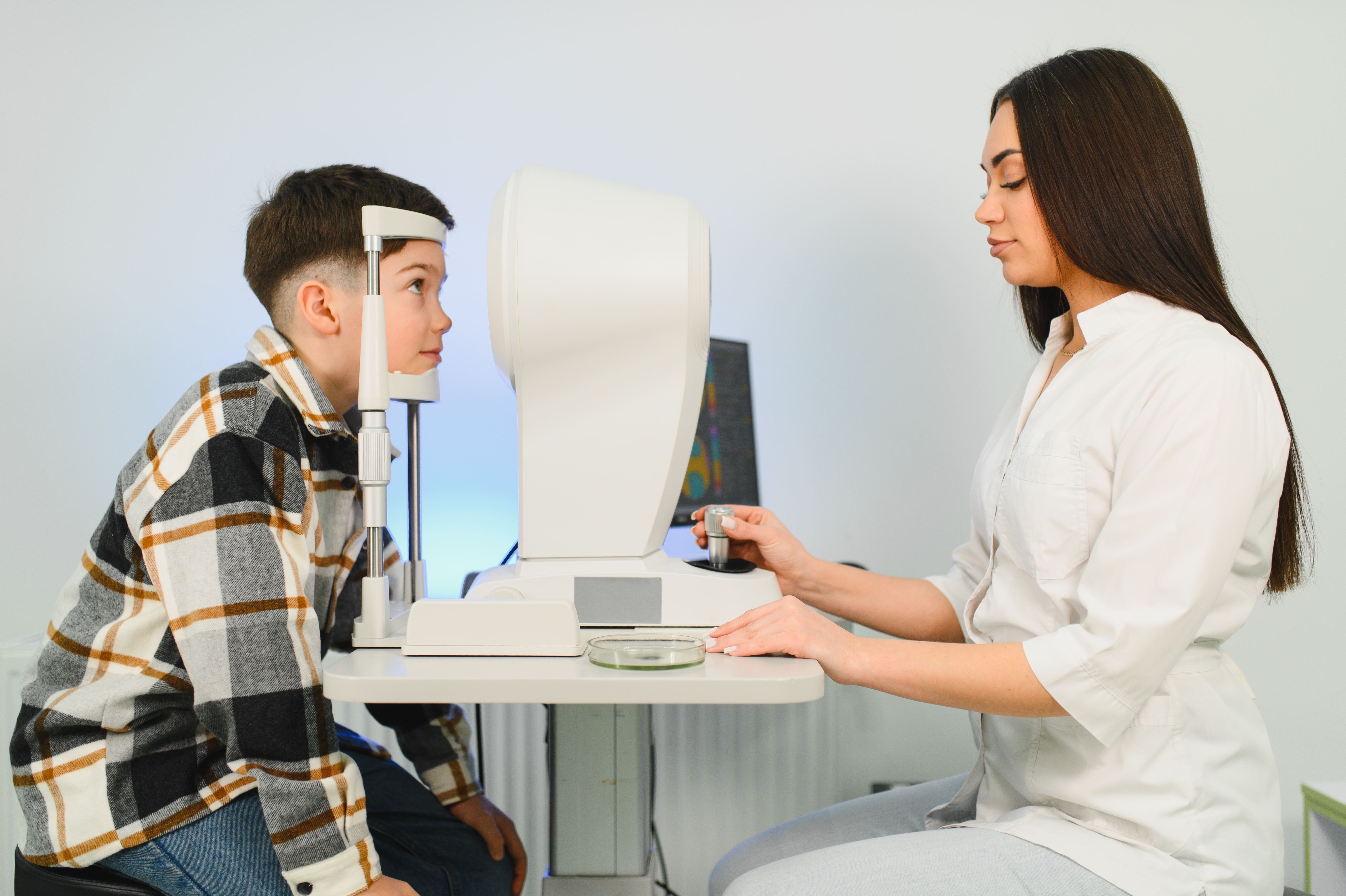
During a comprehensive pediatric eye exam in Naperville, the optometrist looks beyond one measurement of distance clarity. Testing is selected according to the child’s age, development, symptoms, and visual needs.
The examination may assess:
- Near and distance visual acuity
- Nearsightedness, farsightedness, and astigmatism
- Eye focusing and the ability to change focus
- Eye tracking across a page or moving object
- Eye teaming and binocular coordination
- Depth perception and alignment
- Color vision when appropriate
- The internal and external health of the eyes
MaxiVision Eye Care provides comprehensive exams and binocular vision assessments for children in Naperville and surrounding communities. These evaluations can identify vision problems that affect reading, concentration, coordination, and other school-related activities.
Signs a School Screening May Have Missed Something
Children do not always realize that their visual experience is unusual. They may assume everyone sees words blur, loses their place while reading, or develops headaches during homework.
Parents should consider scheduling a comprehensive pediatric eye exam when a child frequently squints, rubs their eyes, covers one eye, holds reading material unusually close, avoids detailed work, or struggles to copy from the board. Other signs may include slow reading, poor concentration during visual tasks, recurring headaches, light sensitivity, or a sudden decline in classroom performance.
These behaviors can have several causes, and an eye exam cannot diagnose every learning or attention concern. However, evaluating vision can determine whether an uncorrected prescription, eye coordination problem, or focusing difficulty is adding to the challenge.
Why Eye Health Testing Matters for Children
A comprehensive exam also allows the optometrist to inspect the physical health of the eyes. Some pediatric eye conditions may not cause obvious symptoms during their early stages. Children may also rely more heavily on one eye when the other is weaker, making a problem less noticeable at home or during a basic screening.
Early identification gives families more time to address conditions such as amblyopia, commonly called lazy eye, or binocular vision difficulties while the visual system is still developing. MaxiVision Eye Care offers personalized pediatric care and focuses on identifying vision concerns that could become obstacles in the classroom.
Prepare Your Child for the School Year
A school vision screening provides useful information, but it should not replace care from an optometrist. Scheduling an exam before classes begin allows time to update glasses, discuss visual symptoms, and address concerns before homework and screen demands increase.
Schedule your child’s comprehensive pediatric eye exam with MaxiVision Eye Care at 4931 IL-59, Unit 115, Naperville, IL 60564, by calling (630) 895-8015.
MAP
Powered by: 
